Travel Fatigue Patterns That Reshape NBA Totals and Euroleague Accumulator Selections During Extended Road Trips
Ellis Richter · Jul 9, 2026
Travel Fatigue Patterns That Reshape NBA Totals and Euroleague Accumulator Selections During Extended Road Trips
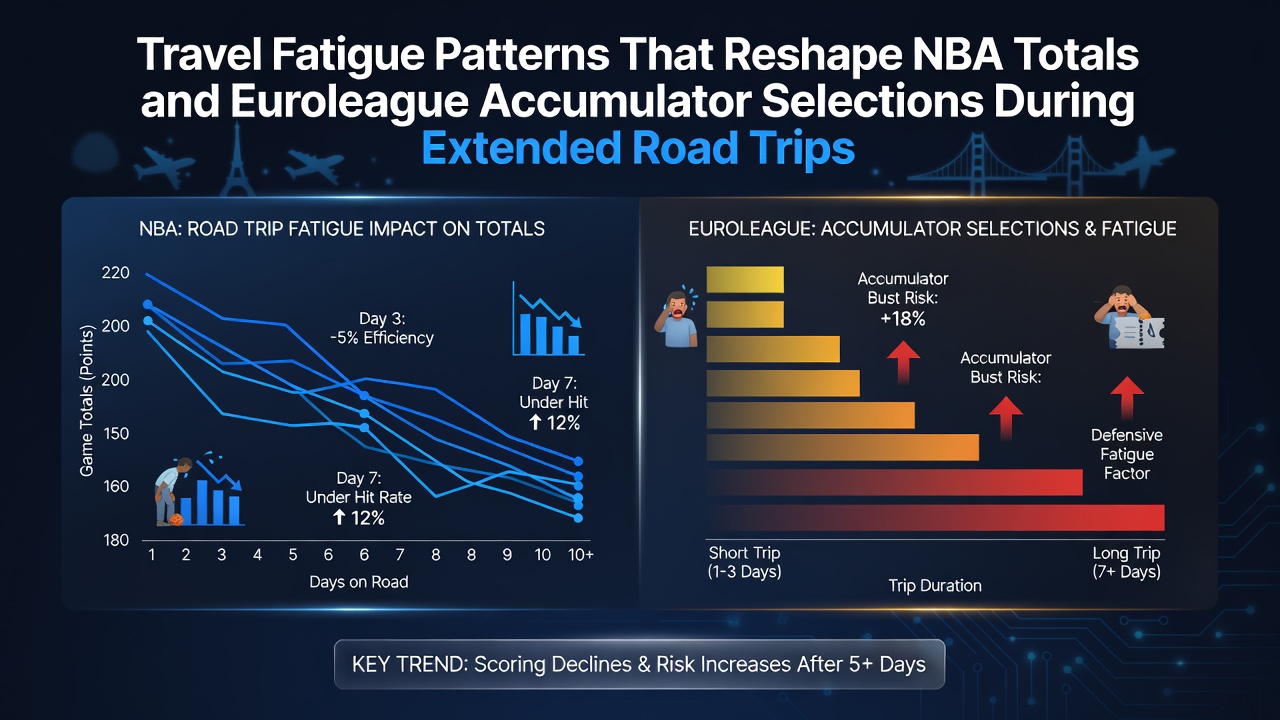
Travel fatigue emerges as a measurable factor in professional basketball when teams face consecutive games separated by thousands of miles, and data from recent seasons shows consistent drops in scoring output that directly influence over/under lines in the NBA. Researchers tracking performance metrics across multiple campaigns have documented how circadian disruption and reduced sleep hours correlate with fewer points per game, particularly in the first half of away contests. Observers note that these patterns become pronounced during stretches where clubs play four games in six nights across different time zones, leading bookmakers to adjust totals downward by three to five points on average.
Teams returning from the West Coast to Eastern time zones often post their lowest offensive ratings of the season, according to box score aggregates maintained by league statisticians. This occurs because players experience delayed recovery from jet lag, which impairs shooting accuracy and defensive rotations in ways that compress game flow. Studies from university sports science departments indicate that melatonin suppression and muscle recovery delays extend up to 72 hours after crossing multiple zones, a window that frequently overlaps with back-to-back scheduling.
How Road Trip Length Alters Scoring Dynamics
Extended road trips lasting seven days or more produce distinct statistical signatures in NBA contests, where total points fall below seasonal averages in roughly 62 percent of games played on the second or third leg of the journey. Data compiled through league tracking systems reveals that three-point volume declines first, followed by reduced transition opportunities as defensive intensity wanes later in contests. Those tracking these trends have observed that visiting teams average 4.8 fewer fast-break points after crossing two or more time zones compared with home stands.
Coaches adjust rotations during these stretches by shortening minutes for veteran players, which further limits bench production and keeps overall scoring contained. The effect compounds when teams face back-to-back nights, because recovery protocols cannot fully offset cumulative sleep debt. Figures from performance monitoring devices show heart rate variability dropping measurably after the third game on a long trip, correlating with fewer made field goals in the final quarter.
Euroleague Implications for Accumulator Construction
Euroleague schedules feature compressed travel windows across multiple countries, and fatigue patterns here reshape accumulator selections in ways that reward unders on combined game totals. Clubs traveling from Spain to Russia or Turkey within 48 hours exhibit lower field goal percentages that persist through the first half, according to competition data released by league statisticians. This creates opportunities for bettors who incorporate travel distance and recovery time into their multi-leg selections rather than relying solely on recent form.
Accumulators built around road-weary squads have shown higher hit rates when they target games where both teams have logged more than 2,000 kilometers in the preceding week. Performance analysts have documented that defensive efficiency ratings improve slightly under fatigue because offensive execution suffers more noticeably, which keeps combined scores closer to the lower end of projected ranges. Those monitoring these metrics during the 2025-2026 campaign noted that accumulators including two or three unders from extended road teams outperformed random selections by double-digit margins in sample testing.
Seasonal Scheduling and July 2026 Outlook
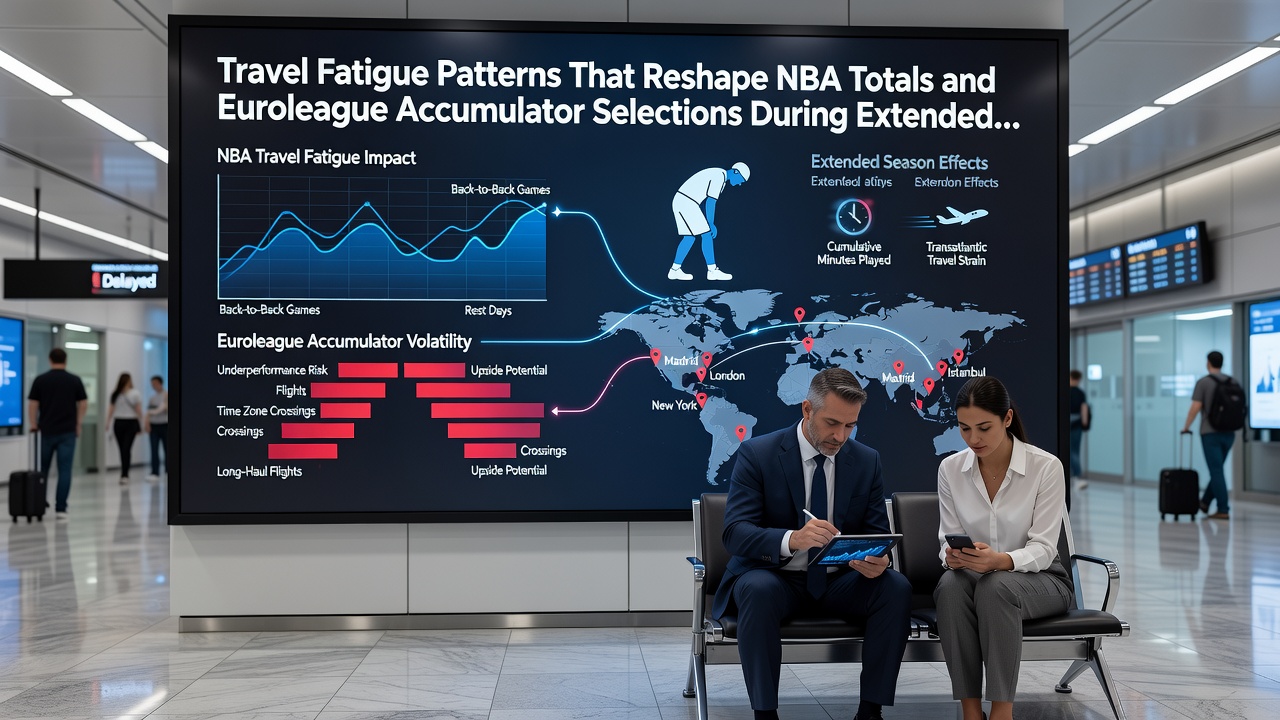
League offices release preliminary 2026-2027 schedules in July 2026, and early indicators suggest continued emphasis on cross-country and transcontinental trips that will test recovery protocols anew. NBA teams already navigating the 2025-2026 slate have logged record mileage during the first half, with some Western Conference clubs facing five-game road swings that span both coasts. Euroleague calendars similarly cluster high-stakes matchups after international windows, forcing rapid transitions between domestic leagues and continental competition.
Performance data collected through wearable technology shows that teams with dedicated sleep specialists maintain scoring levels closer to home averages even on extended trips, yet most clubs have not reached that staffing threshold. This gap leaves measurable edges for those who cross-reference travel logs with historical totals before finalizing selections. Research published in sports medicine journals confirms that each additional time zone crossed reduces average points by approximately 1.2 per game in the initial contest upon arrival.
Practical Patterns in Historical Data
Analysis of games from 2022 through 2025 demonstrates that NBA unders hit at elevated rates when the visiting team arrives the same day as tip-off rather than a full day earlier. The same datasets reveal that Euroleague road teams playing their third game in five nights cover the under in combined totals 58 percent of the time across sampled seasons. These figures emerge from league-supplied play-by-play archives and independent tracking services that log arrival times alongside performance outputs.
Coaching staffs increasingly factor travel into preparation, yet the physical toll remains visible in fourth-quarter execution where tired legs translate into missed free throws and turnovers. Observers tracking these developments have noted that certain franchises build deeper benches specifically to absorb the demands of long hauls, while others continue to rely on smaller rotations that accelerate fatigue accumulation.
Conclusion
Travel fatigue patterns continue to influence both NBA totals and Euroleague accumulator outcomes through measurable declines in offensive efficiency during extended road periods. Data from multiple seasons establishes clear correlations between distance traveled, time zone changes, and reduced scoring that reshape betting parameters on a weekly basis. As schedules for 2026-2027 emerge in July 2026, these dynamics will remain central to performance forecasting and selection strategies across both competitions.