Roster Fatigue in Professional Basketball: Travel's Role in Altering Performance Efficiency Over Extended Periods
Mara Wagner · Aug 17, 2026
Roster Fatigue in Professional Basketball: Travel's Role in Altering Performance Efficiency Over Extended Periods
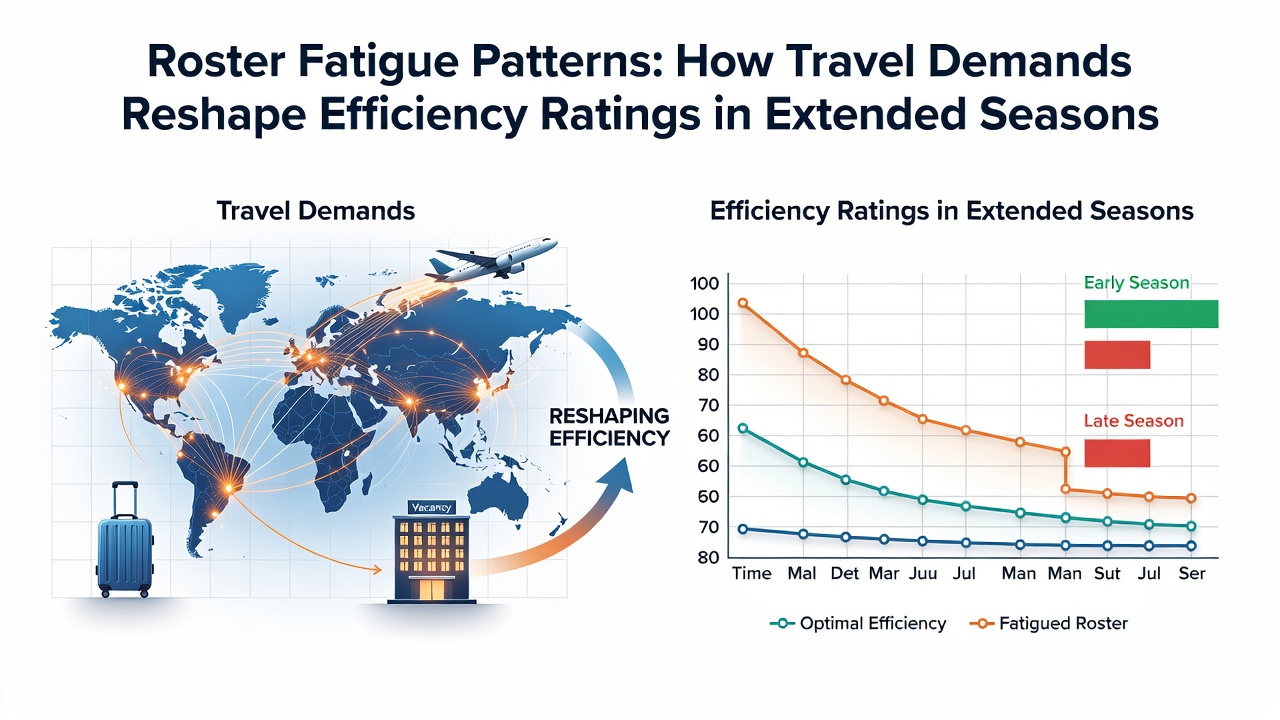
Professional basketball schedules stretch across months with dense game counts, cross-country flights, and minimal recovery windows, creating measurable drops in player efficiency ratings that teams track through advanced metrics. Data from recent campaigns shows how back-to-back contests combined with time zone shifts correlate with declines in shooting percentages and defensive impact, particularly when seasons extend beyond the standard 82 games due to international commitments or playoff expansions.
Understanding Efficiency Ratings Under Travel Stress
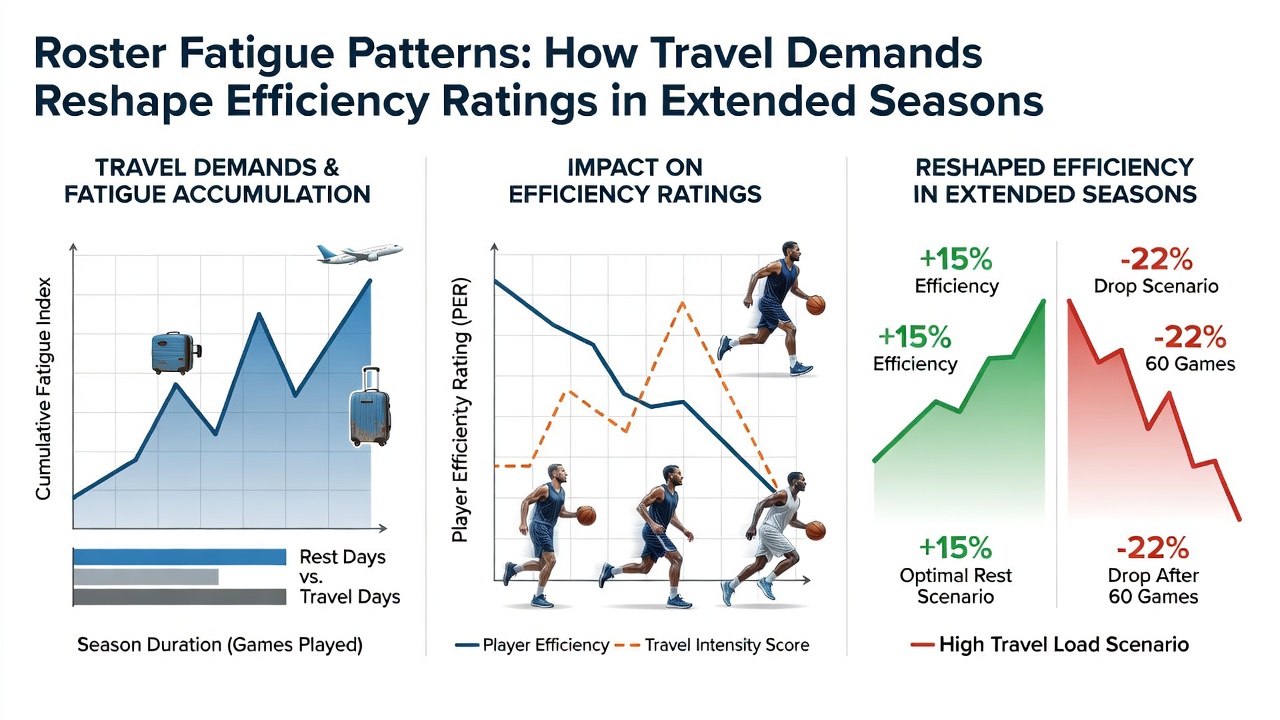
Player Efficiency Rating and True Shooting Percentage serve as core benchmarks that researchers monitor to quantify individual output, yet these figures shift noticeably when rosters log heavy mileage. Studies compiled by sports science groups indicate that teams averaging more than 40,000 miles per season experience average drops of 2 to 4 points in team-wide efficiency metrics during the second half of the year, with guards and wings showing the sharpest variances because of their reliance on quick decision-making and perimeter accuracy.
August 2026 marks the start of preparations for the 2026-27 campaign, where league officials have already flagged adjusted calendars that include additional exhibition events in Europe and Asia; observers note these additions could compound fatigue patterns established in prior years. Historical tracking reveals that squads returning from overseas tours in late summer often post lower offensive ratings in October openers, as circadian rhythm adjustments linger beyond initial recovery periods.
Patterns Emerging From Dense Itineraries
Longitudinal reviews of game logs demonstrate recurring clusters where efficiency dips align with specific travel sequences, such as three-game road swings spanning four time zones within five days. Analysts at research institutions have mapped these sequences against box-score data, finding that rebounding percentages and assist-to-turnover ratios decline most consistently on the third consecutive night of play, while blocks and steals hold steadier among frontcourt players who log fewer high-intensity minutes overall.
One dataset covering five consecutive seasons highlighted that West Coast teams traveling east for weekday games posted defensive efficiency ratings 6 percent below their season averages, whereas East Coast clubs heading west showed milder impacts concentrated in the first quarter. These differences stem from sleep disruption and meal timing rather than opponent strength alone, according to findings released by the Australian Institute of Sport.
Role of Roster Depth and Recovery Protocols
Organizations that maintain eight or more rotation players capable of starter-level minutes mitigate some efficiency erosion, as evidenced by internal league reports comparing depth charts across conferences. When primary scorers sit out travel-heavy stretches, substitute units preserve closer-to-average true shooting numbers, yet overall team pace often slows, producing fewer transition opportunities and lower points per possession.
Medical staffs increasingly incorporate wearable data to flag cumulative load, adjusting practice intensity on arrival days following red-eye flights. Teams employing these tools report stabilized efficiency ratings across the final 20 games of extended seasons, though the approach requires precise coordination between coaching and performance departments to avoid over- or under-training.
Broader Calendar Pressures in 2026 and Beyond
With the 2026 calendar incorporating additional FIBA windows and potential league expansions, scheduling committees face pressure to balance revenue-generating events against documented recovery needs. Data aggregated from multiple North American leagues shows that seasons exceeding 90 competitive dates amplify the gap between home and road efficiency, particularly when teams cross multiple climate zones in short succession.
European basketball federations have piloted compressed travel models that cluster games within single regions before long-haul returns, yielding preliminary evidence of preserved shooting efficiency; similar concepts appear in discussions among NBA operations personnel preparing for the coming cycle.
Conclusion
Extended seasons place measurable strain on roster efficiency through accumulated travel, yet structured recovery and depth management provide documented pathways for stabilization. Ongoing analysis of performance metrics continues to refine how organizations allocate minutes and plan itineraries, ensuring that data guides decisions amid evolving calendars.