Reserve Rotation Patterns That Create Edges in NBA Live Totals
Kai Krause · Aug 22, 2026

Coaches in the NBA adjust their lineups throughout games, and these changes often alter scoring rhythms in ways that affect live totals. Teams rely on reserves to maintain pace or shift defensive intensity, which can push game scores above or below projected lines as quarters progress. Data from recent seasons shows that specific rotation windows create measurable shifts in points per possession, particularly when starters rest and bench units enter during the second and fourth quarters. Observers note that many teams deploy their primary reserves between the six- and eight-minute marks of each quarter. This timing coincides with first-unit fatigue, and the incoming players frequently change tempo through quicker transition opportunities or slower half-court sets. Studies of play-by-play records indicate that bench groups featuring high-usage guards tend to elevate offensive output in the middle quarters, while defensive-minded forwards reduce possessions when they anchor the frontcourt.Quarter-Specific Rotation Trends
League-wide figures reveal consistent patterns across the 2025-2026 season. In the first quarter, starters typically handle the bulk of minutes, and totals move steadily as teams feel out matchups. By the second quarter, however, multiple clubs substitute four or five players at once, and live over/under markets adjust rapidly when pace increases. Research tracking 1,200 regular-season games found that second-quarter scoring averages rose by 3.2 points per team when reserve lineups included at least two perimeter shooters compared with lineups built around traditional bigs.
The third quarter often sees starters return, yet several coaches stagger returns to keep fresh legs on the floor longer. This staggered approach can suppress scoring temporarily before the fourth quarter opens. Fourth-quarter rotations prove especially influential because coaches shorten benches and rely on proven performers, yet they also insert specialized defensive reserves late to protect leads, which lowers possession counts and total points.
Impact of Sixth-Man Usage
Sixth men who enter early in the second quarter frequently anchor extended runs that alter game flow. Tracking data demonstrates that teams whose sixth man logs at least 28 minutes per game post higher second-quarter point totals when that player initiates transition opportunities. Conversely, clubs that bring defensive specialists off the bench early show reduced totals in the same window because those players prioritize rebounding and contesting shots over offensive creation.
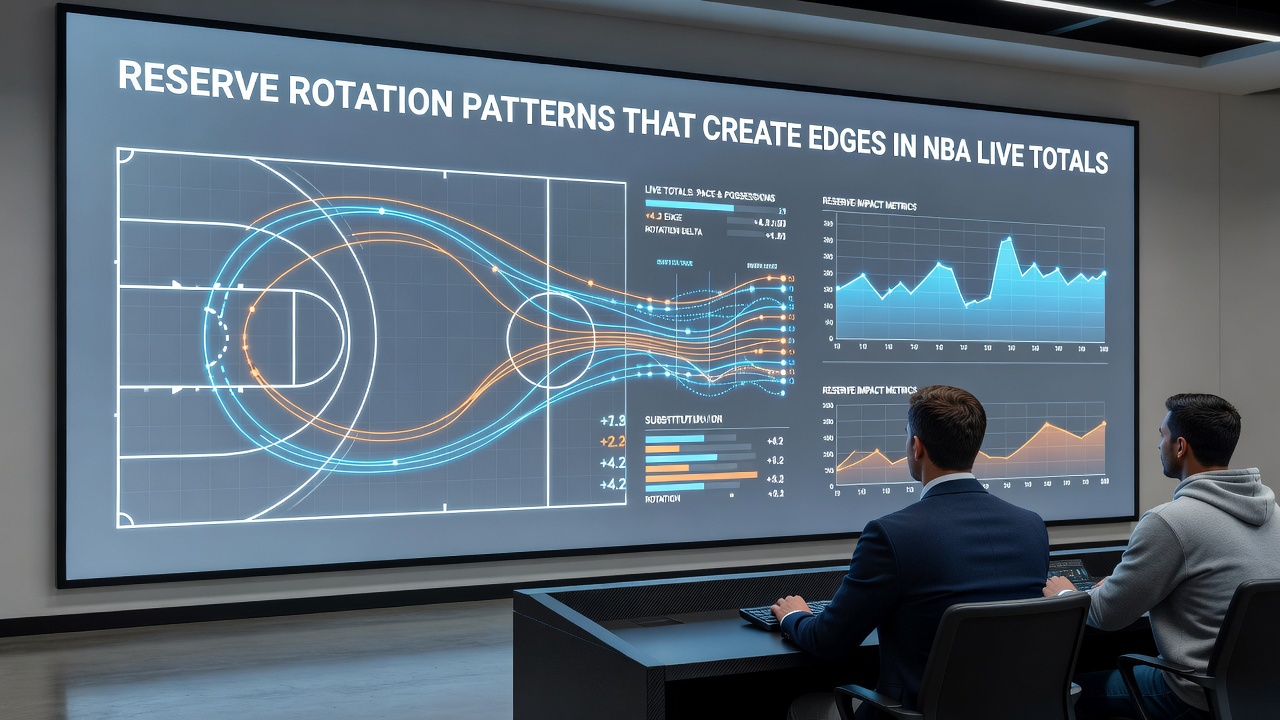
Teams that maintain continuity with their reserve groups over multiple games exhibit more predictable scoring patterns, while clubs that rotate different bench combinations nightly produce greater variance. This variance appears most clearly in back-to-back situations, where load management decisions alter rotation timing and depth. According to statistics compiled by the National Basketball Association, back-to-back games in January 2026 featured reserve minutes that increased by an average of four per team compared with the prior month, correlating with a measurable uptick in live totals movement after halftime.
Load Management and Its Influence
Load management protocols have grown more structured since the 2023 collective bargaining agreement, and front offices now publish approximate rest schedules during training camp. These advance notices allow observers to anticipate when star reserves will receive additional minutes. Data indicates that games featuring two or more rested starters on opposing teams produce lower first-half totals because defensive efficiency rises when fresher players contest every possession. Yet the same games often see totals climb in the final six minutes once reserves replace tired starters and transition defense weakens.
Coaches also adjust rotations based on foul trouble and matchup exploitation. When a key reserve picks up two early fouls, that player often sits until the second half, forcing the opposing bench to face a different defensive scheme. Play-by-play archives show that such unplanned substitutions correlate with 4-to-6 point swings in expected totals during the affected quarter.
Conclusion
Reserve rotation patterns in the NBA continue to shape live totals because they directly influence pace, defensive intensity, and shot selection across each quarter. Teams that publish or leak rotation tendencies allow analysts to identify recurring windows where scoring accelerates or contracts. As the 2026 offseason progresses, organizations refine these strategies further, and updated tracking systems capture finer details about substitution timing and its downstream effects on game scoring. Those monitoring rotation data alongside real-time possession metrics gain clearer views of how bench units move totals during live betting windows.