Referee Crew Variations Create Distinct Edges for Discerning NBA Bettors
Mara Wagner · Aug 3, 2026

Referee crews in the NBA operate with measurable differences in foul calls, pace management, and free throw rates that directly affect game totals and player props. Data compiled across multiple seasons shows certain crews average 22.4 fouls per game while others stay near 18.9, creating predictable edges for those tracking assignments before tip-off. These patterns emerge most clearly in regular season matchups where crew rotations follow established schedules released by the league office each August. Observers note that veteran crews tend to allow more physical play in the paint, which reduces the number of whistle stops and keeps games flowing at higher tempos. In contrast newer combinations often call more perimeter fouls, pushing free throw attempts above league averages of 21.8 per contest. Researchers tracking these trends through public play-by-play logs find that totals involving teams with high foul-draw rates move sharply once assignments become official, typically 24 to 48 hours before games.Documented Crew Tendencies Across Recent Seasons
League records indicate that specific trios produce consistent statistical deviations. One group led by experienced officials averaged 28.3 free throws combined per game last season, while another stayed at 19.7. Bettors who monitor these figures adjust totals markets accordingly because the variance exceeds random fluctuation. Play-by-play analysis further reveals that certain crews issue technical fouls at double the league rate, which adds extra points through free throws and alters late-game strategy for coaches who adjust lineups to avoid ejection risks.
August 2026 marks the period when the NBA releases its preseason schedule and begins assigning crews to early training camp exhibitions. These assignments provide the first look at how rotations will distribute across conferences, allowing analysts to build updated models before the regular season begins in October. Historical data shows that crews returning from the previous year maintain their foul-call profiles within a narrow range, while new pairings require several weeks of observation before stable patterns appear.
Impact on Player Props and Team Totals
Individual player statistics shift noticeably under different crews. High-usage guards who draw contact on drives see their free throw prop lines rise when matched against crews that average above 5.2 personal fouls per 48 minutes on perimeter players. Conversely, teams that rely on three-point volume experience fewer shooting foul calls when assigned to crews that protect the arc less aggressively. Aggregated box score data confirms these effects persist across home and away games, though home teams receive a slight additional advantage under crews that historically favor the home side by 1.1 fouls per game.
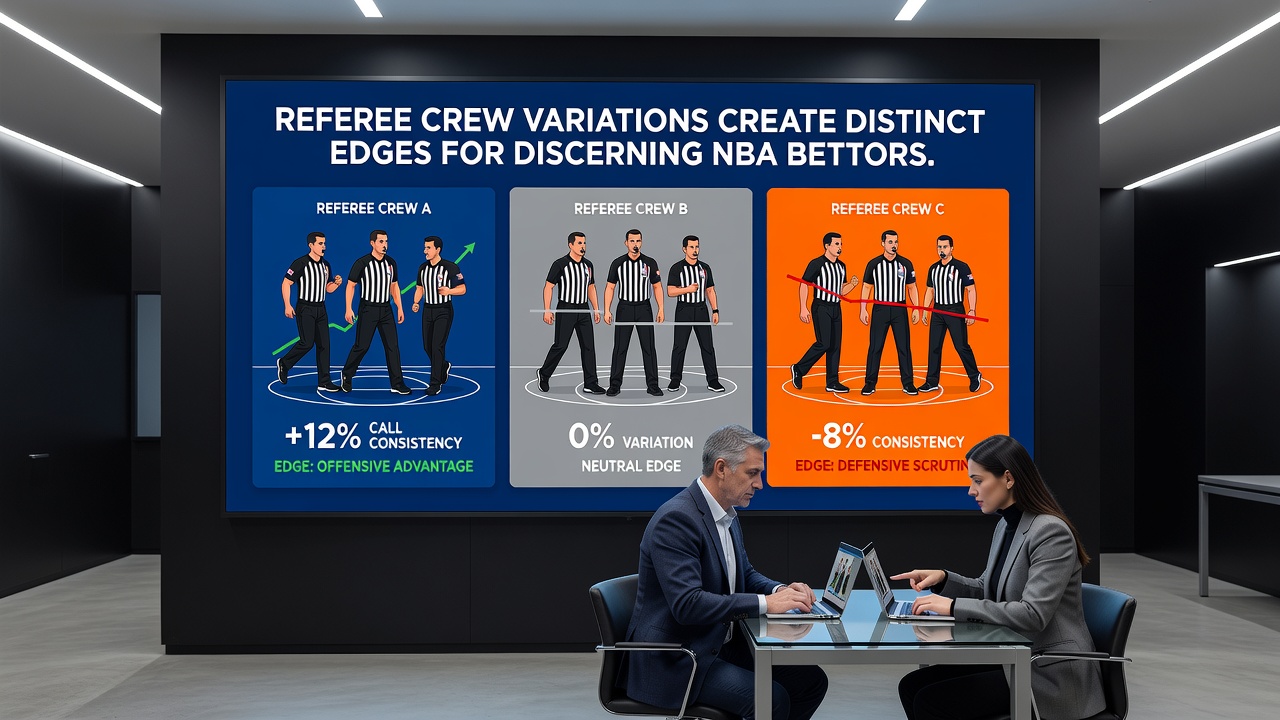
Line movement studies conducted by independent analytics groups demonstrate that sharp bettors target overs on free throw totals when favorable crews are announced. The same research tracks unders on points when low-foul crews take the floor, because fewer interruptions allow defenses to set and contest shots more effectively. These edges compound in back-to-back situations where fatigue amplifies the effect of crew style on foul rates.
Tracking and Applying Assignment Data
Public sources such as the official NBA website publish crew assignments daily, while advanced statistical platforms compile historical foul rates for each official. Bettors cross-reference these releases with team pace metrics and injury reports to refine totals and prop selections. Multiple seasons of data indicate that the largest discrepancies occur in games involving expansion-era crews or those returning from injury-related absences, where consistency dips for several outings.
Geographic differences also appear when crews travel across time zones, though league scheduling attempts to minimize such variables. European studies on officiating consistency, including work published by sports science departments at institutions like the University of Sydney, have examined similar referee variability in other professional leagues and found parallel effects on scoring distributions. NBA-specific tracking aligns with those broader findings, showing that crew familiarity with arena environments influences call volume more than travel alone.
Conclusion
Referee crew variations produce measurable, recurring impacts on NBA game statistics that extend directly into betting markets. Consistent data collection around foul rates, free throw differentials, and technical foul frequency allows informed participants to adjust projections once assignments are confirmed. As the league continues releasing schedules and crew lists each August, these patterns remain available for systematic review ahead of the season.