Pace Dynamics Mid-Season Reshape Totals Markets in NBA and European Basketball Leagues
Iris Zimmermann · Sep 2, 2026
Pace Dynamics Mid-Season Reshape Totals Markets in NBA and European Basketball Leagues
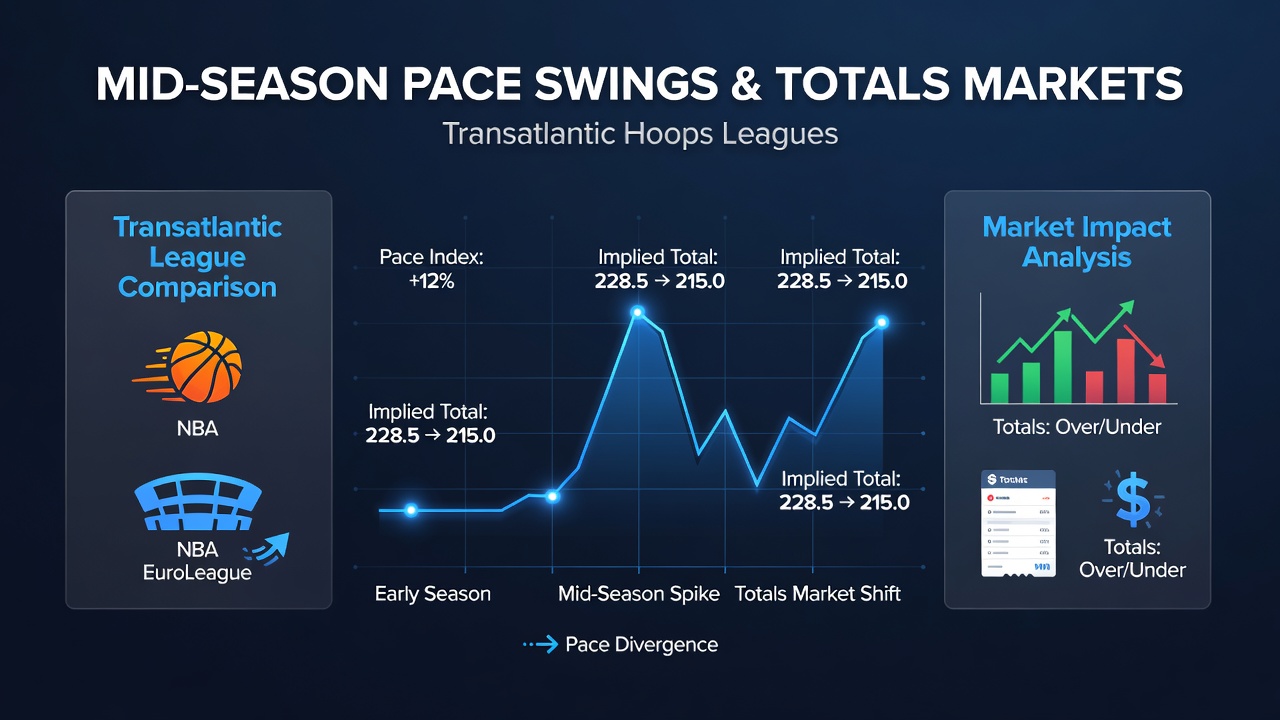
Analysts track pace as the number of possessions per 48 minutes, and data from multiple seasons shows that mid-season adjustments in this metric frequently move totals lines in both the NBA and Euroleague. Teams alter their tempo after the all-star break or during winter stretches because of roster trades, coaching shifts, and accumulated fatigue, which in turn changes average points per game. Observers note that these swings create measurable edges for totals bettors who monitor possession rates across transatlantic schedules.
Core Elements of Pace Measurement
Research from sports analytics groups indicates that pace correlates directly with scoring volume since more possessions lead to additional shot attempts and transition opportunities. In the NBA, league-wide pace has hovered near 100 possessions per game in recent years, whereas Euroleague contests often settle around 75 possessions due to stricter defensive rules and longer shot clocks. When a squad increases its pace by even three possessions mid-season, totals markets adjust upward because projected points rise accordingly.
Coaches implement these changes through lineup tweaks or defensive scheme modifications, and statistical models reveal that such shifts appear most clearly in the second half of the regular season. For instance, teams facing elimination from playoff contention sometimes accelerate their offense, producing higher game totals than early-season projections anticipated.
Factors Driving Mid-Season Tempo Shifts
Player acquisitions represent one primary catalyst, as new additions bring different playing styles that either speed up or slow down team rhythm. Injury recoveries also play a role because returning stars may demand more half-court sets, reducing overall pace. Data compiled by international basketball federations shows that schedule density in December and January often forces coaches to manage minutes differently, leading to noticeable tempo drops that persist into February and March.
Weather and travel across time zones further influence European squads during transatlantic exhibition windows, although domestic leagues experience similar effects from back-to-back games. Those who study box scores across both continents find that teams averaging fewer than 80 possessions in the first 20 games frequently post higher pace figures after the midpoint once rotations stabilize.
Effects on Over/Under Market Movements
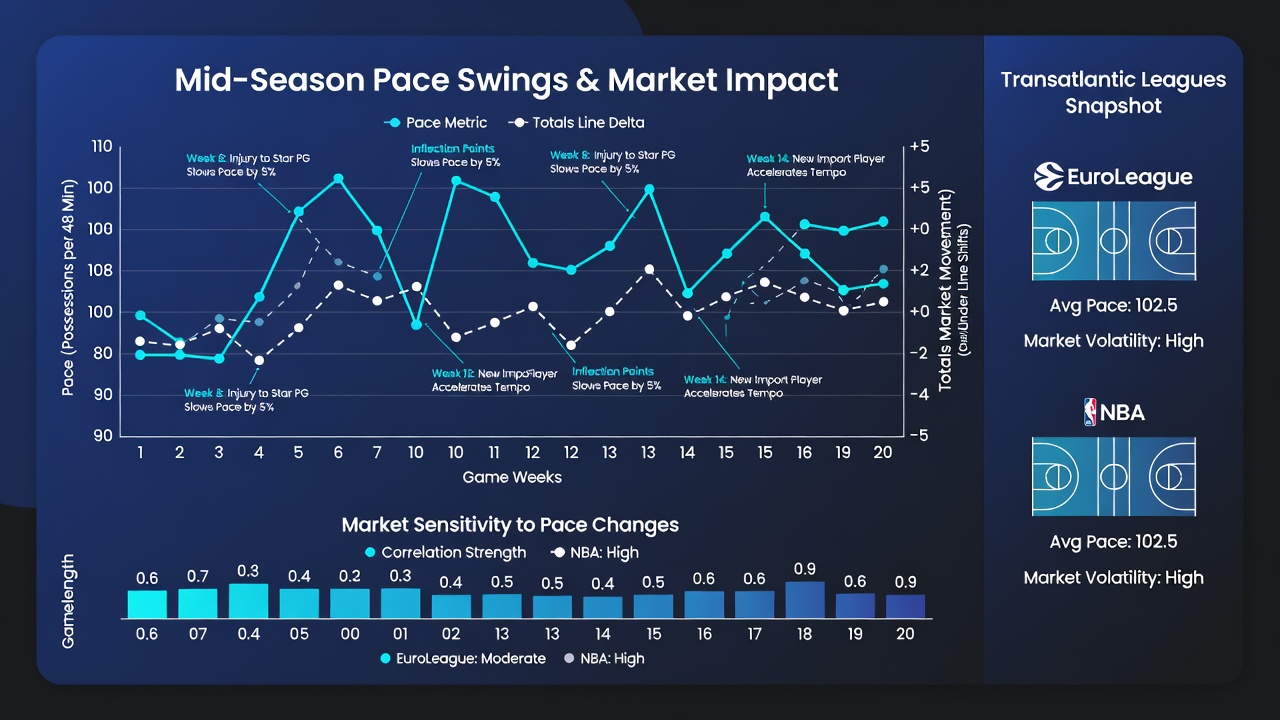
Betting exchanges respond quickly once possession data updates, and historical records demonstrate that totals lines move an average of 3.5 points when a team's pace deviates more than four possessions from its season norm. NBA markets tend to react faster because of higher scoring baselines, while Euroleague totals adjust more conservatively given the league's emphasis on half-court execution. Bookmakers incorporate advanced metrics such as effective field goal percentage alongside pace to recalibrate offerings, which prevents sharp bettors from exploiting outdated numbers.
Studies released by academic sports research centers confirm that late-season pace increases correlate with over outcomes in roughly 58 percent of games, particularly when both teams adopt faster styles simultaneously. Conversely, defensive-minded clubs that tighten their schemes after mid-season losses push games toward the under side of the total.
Comparative Patterns Across Leagues
Transatlantic matchups, including preseason tours and summer league exhibitions scheduled around September 2026, provide additional data points because rule differences amplify pace contrasts. NBA teams often impose higher tempos on European opponents, resulting in elevated totals that exceed preseason averages. League officials track these interactions to refine scheduling, and the resulting datasets help model future market behavior more accurately.
Those monitoring multiple jurisdictions observe that Canadian and Australian basketball competitions exhibit similar mid-season pace volatility, offering parallel examples of how totals markets adapt when teams transition between conference play and international events.
Conclusion
Comprehensive records from league databases illustrate that mid-season pace swings consistently influence totals markets in both the NBA and European basketball leagues through direct effects on scoring volume. Continued collection of possession statistics enables precise line adjustments, and participants who follow these metrics gain clearer views of evolving game environments. As schedules progress toward September 2026 training periods, updated pace trends will likely shape early projections for the following campaign.