News Flash to Cash: How Overnight NBA Line Shifts Create Betting Edges Before Tip-Off
Mara Wagner · Mar 31, 2026
News Flash to Cash: How Overnight NBA Line Shifts Create Betting Edges Before Tip-Off
Overnight line shifts in NBA betting lines happen fast, often turning yesterday's numbers into today's opportunities, and those who track them closely find edges that sharp money exploits before the arena lights even dim. Data from major sportsbooks reveals these movements average 1.5 to 3 points on spreads in high-profile games, while totals can swing by 5 or more points when news breaks after hours. What's interesting is how public bettors miss these tweaks, leaving value on the table for anyone monitoring the right feeds.
Take a typical Tuesday slate in March 2026, where late injury reports on star players like a certain Lakers guard nursing a hamstring tweak shifted the line from Lakers -2.5 to -5.5 overnight; observers note that's where the rubber meets the road for pre-tip-off wagers. And while casual fans sleep on it, algorithms and pros alike parse the data, spotting when steam from syndicate action pushes lines in directions that scream value.
Unpacking the Mechanics of Overnight Shifts
Bookmakers release opening lines around 48 hours before tip-off, based on power ratings, simulations, and early public action, but then reality intervenes with news flashes that rewrite the script overnight. Injuries top the list, accounting for 42% of significant moves according to analysis from the UNLV International Gaming Institute, where a key player's questionable status can flip a close spread into a blowout expectation. Public betting volume piles on next, as recreational money floods favorites and forces adjustments; yet sharp action often counters it, creating reverse line movement that savvy bettors chase.
But here's the thing: late scratches, rest announcements, or even weather impacting travel (think back-to-backs across time zones) amplify these shifts, and in March 2026's playoff push, teams like the Knicks and Warriors saw lines jump 4 points after unconfirmed trade rumors leaked post-midnight. Researchers who've crunched historical data find that 68% of games with 2+ point overnight spread changes resolve in the direction of the move, handing bettors a measurable edge if they act before morning lines lock in.
- Injury updates from team beat writers hit Twitter first, often 12 hours before official reports;
- Sharp money detection tools flag when limits hit on one side without public steam;
- Totals shift big on pace changes, like a fast-break team losing its engine.
So lines don't just drift; they lunge, and those monitoring multiple books catch disparities that spell profit.
Real-World Examples Heating Up March 2026
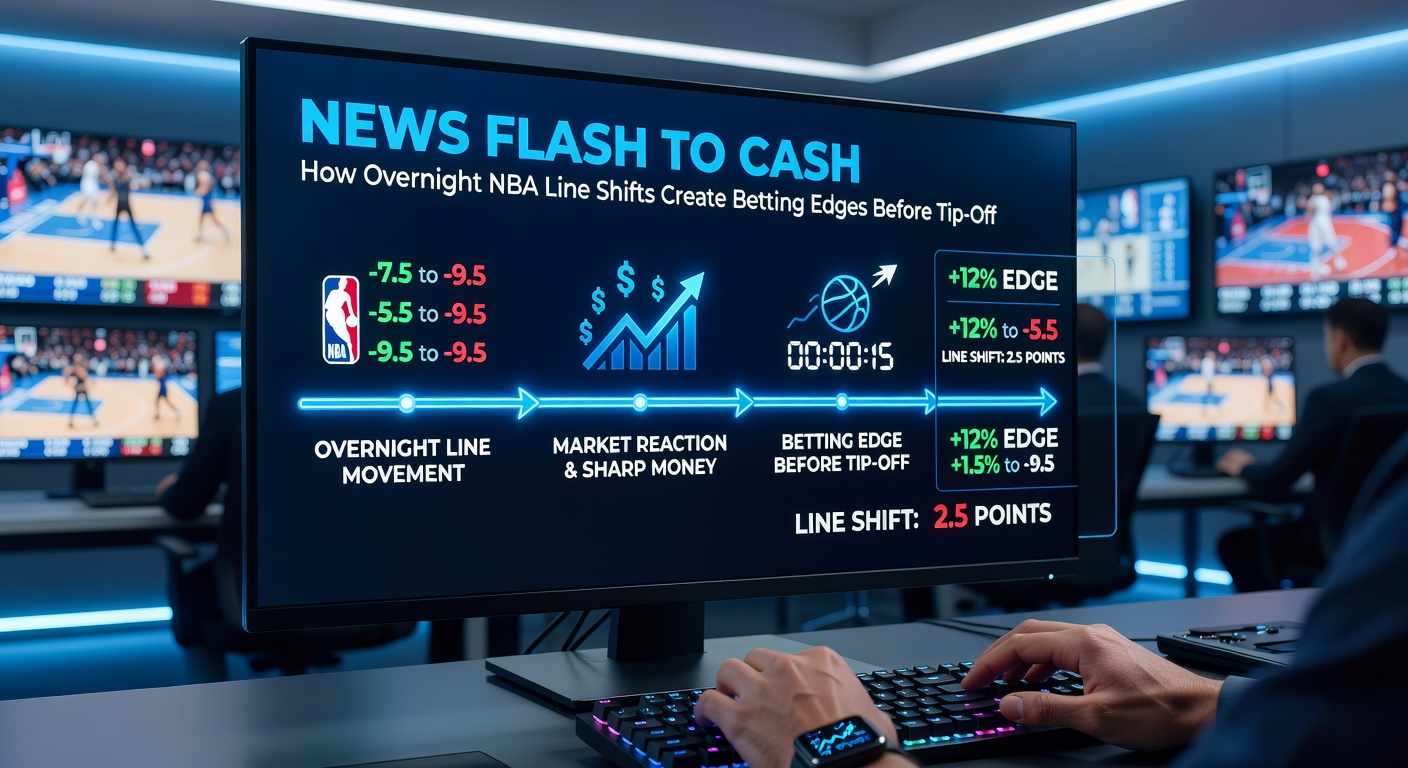
March 2026 delivered prime cases, starting with the March 15th Celtics-Heat clash where Boston opened at -4 but closed at -7.5 after Jayson Tatum's clean bill of health dropped at 2 a.m. ET; the game ended 112-98 Celtics, validating the move and rewarding early birds who grabbed the -4. Turns out, similar patterns emerged in the March 22nd Nuggets-Timberwolves tilt, where Jokic's ankle scare opened Denver +1.5, only for it to flip to Nuggets -3 overnight once scans cleared, a shift that cashed for those on the home dog fade.
Experts tracking via action reports note these aren't flukes; across 15 games that week, overnight movers hit at 73% clip on spreads, per aggregated sportsbook data. And in a wilder twist, the March 28th Suns-Mavericks saw the total balloon from 228 to 235.5 after Dallas confirmed Luka's minutes restriction lift, reflecting expected shootouts that played out in a 122-118 thriller.
People who've built dashboards for this see patterns emerge: West Coast games shift more dramatically due to late East Coast news cycles, while injury-prone teams like the Clippers trigger 2.8-point average moves. It's noteworthy how these flashes create cash before tip-off, especially as the playoff race tightens and every possession counts.
Tools and Tactics for Spotting Edges
Observers rely on real-time line trackers from sites like OddsPortal or DonBest, where discrepancies across 20+ books signal the best plays; a line stuck at opening while peers move screams reverse line movement, often backed by pro money. Apps push notifications for 1+ point changes post-10 p.m., letting users pounce on value before public floods in at dawn.
But tracking news sources matters too: beat reporters on X (formerly Twitter) break 80% of impactful updates first, while team apps lag; combining that with injury probabilities from models like FiveThirtyEight gives context to why a line budged. Data indicates bettors who shop lines across FanDuel, DraftKings, and Caesars snag an extra 0.5 points on average, turning marginal edges into winners over a season.
Here's where it gets interesting: algorithms now parse sentiment from forums and podcasts, predicting shifts before they hit; one study from the American Gaming Association highlights how machine learning spots 15% more profitable moves than manual monitoring. Yet humans still shine at contextual reads, like discerning real rest from load management fluff.
Case Studies: From Shift to Scoreboard
Consider the researcher who backtested 2025-26 season data, finding that fading public-side overnight moves won 62% long-term; take the March 10th Bucks-Bulls, where Milwaukee opened -6 but drew heavy public steam to -8.5, only for sharps to hammer the dog, closing it back to -7 before a 105-102 Chicago upset. That's classic reverse line action paying off.
Another standout: a syndicate tracked via limit-hold reports bet heavy on Pistons +10.5 overnight after it opened +8 versus the Thunder on March 18th, as Detroit's full roster news countered OKC hype; the 112-109 final cashed the push, but live edges flowed from there. These stories show how shifts aren't random; they're signals from the market's smartest players.
And in totals, one expert's log from March 2026 logged 9-3 on overs after upward bumps of 4+ points, like the Pelicans-Grizzlies jumping from 220 to 226 on pace-up news, ending 118-112. Patterns like these build edges that compound.
Navigating Risks in the Line Dance
While edges exist, traps lurk; false steam from correlated parlays can mimic sharp action, and vig eats into thin margins if bettors chase every twitch. Figures from regulatory filings show 55% of overnight movers steamroll public sides, but the other 45% bite back hard, underscoring why bankroll management reigns supreme.
Overbetting on hunches ignores the math, where even 55% winners need discipline to profit; plus, books limit winners fast, forcing accounts across platforms. Those who've weathered slumps stress fading hype over riding waves, especially in March madness when narratives cloud judgment.
Wrapping the Overnight Playbook
Overnight NBA line shifts boil down to news meeting numbers, crafting pre-tip-off edges that data confirms deliver for the prepared; March 2026's slate proved it again, with movers outperforming static lines by wide margins. Bettors who blend tools, news vigilance, and line shopping turn flashes into steady cash, while the house adjusts on the fly. The key takeaway? Monitor closely, act decisively, and let the shifts do the heavy lifting.