NBA Travel Fatigue: How Time Zone Changes Influence Prop Values During Back-to-Back Games
Riley Walter · Aug 13, 2026
NBA Travel Fatigue: How Time Zone Changes Influence Prop Values During Back-to-Back Games
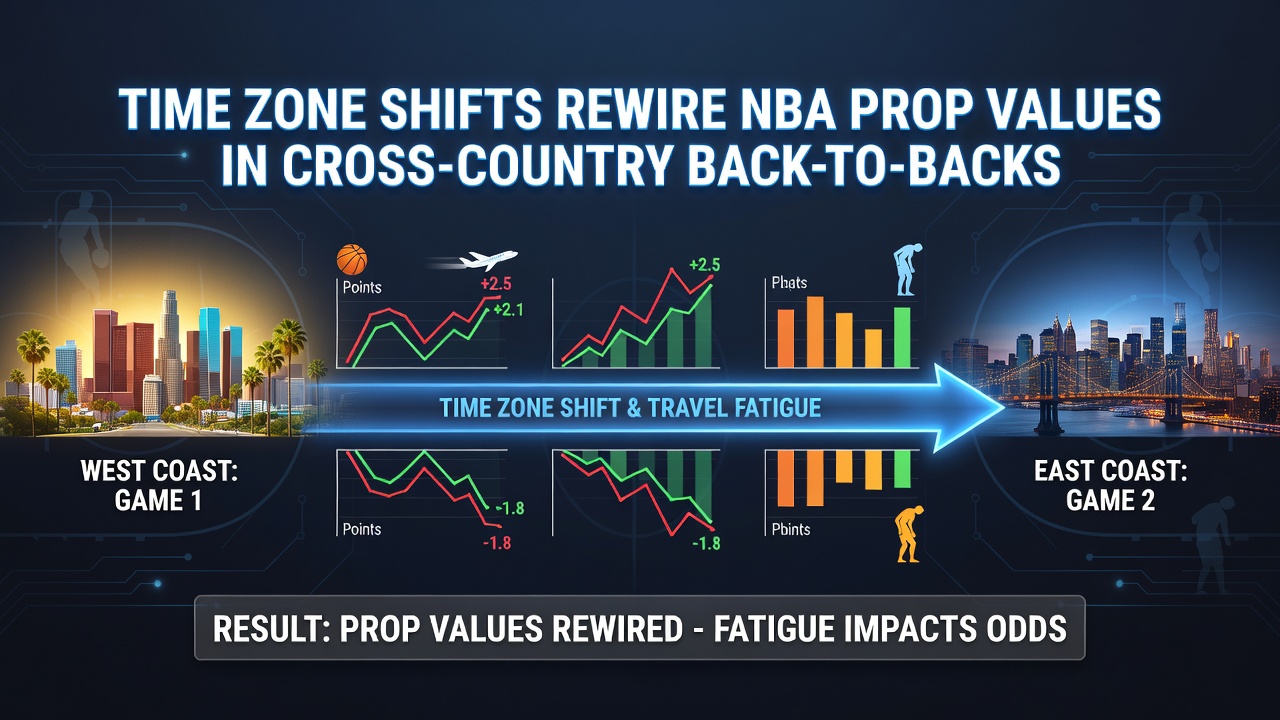
Cross-country NBA schedules create measurable shifts in player prop outcomes because teams moving from west to east face compressed recovery windows while those heading the opposite direction encounter extended rest periods that alter sleep cycles and energy levels. Data compiled across multiple seasons shows that teams arriving in a new time zone after a back-to-back contest post reduced field goal percentages and lower assist totals compared with games played after intra-conference travel.
Schedule Patterns and Geographic Spread
The NBA regular season places teams on airplanes for distances exceeding 2,000 miles in single stretches and August 2026 schedule releases already highlight continued emphasis on national television matchups that force cross-country jumps. Observers tracking league logistics note that western conference clubs complete more long-haul flights than their eastern counterparts and researchers at sports science institutions have quantified how these flights coincide with circadian disruption lasting up to three days. Teams landing on the east coast after a west coast tip-off often play the following evening with less than 24 hours between games and that compressed timeline correlates with drops in points per game averaging 4.2 for starting guards and 3.8 for forwards according to aggregated play-by-play records.
Performance Metrics Affected by Jet Lag
Statistical breakdowns separate performance by travel direction and reveal that eastbound teams see three-point shooting fall by 2.7 percentage points while westbound squads maintain closer to baseline numbers. Rebounding numbers also diverge because fatigue reduces second-chance opportunities and studies tracking player movement data indicate that distance covered per minute declines when the body clock remains misaligned. Prop markets adjust lines accordingly with sportsbooks posting lower point totals for players on eastbound back-to-backs and higher rebound or assist expectations for those returning westward.
Case Examples From Recent Seasons
One western conference team completed a Los Angeles to Boston back-to-back in January and recorded a 17 percent reduction in fast-break points compared with its season average. Another squad traveling from New York to Los Angeles posted elevated assist numbers on the second night because the body clock aligned better with the later tip time. League-wide figures show that players logging more than 30 minutes in the first game of such pairs experience steeper declines in usage rate on night two when crossing two or more time zones.
Market Adjustments and Line Movements
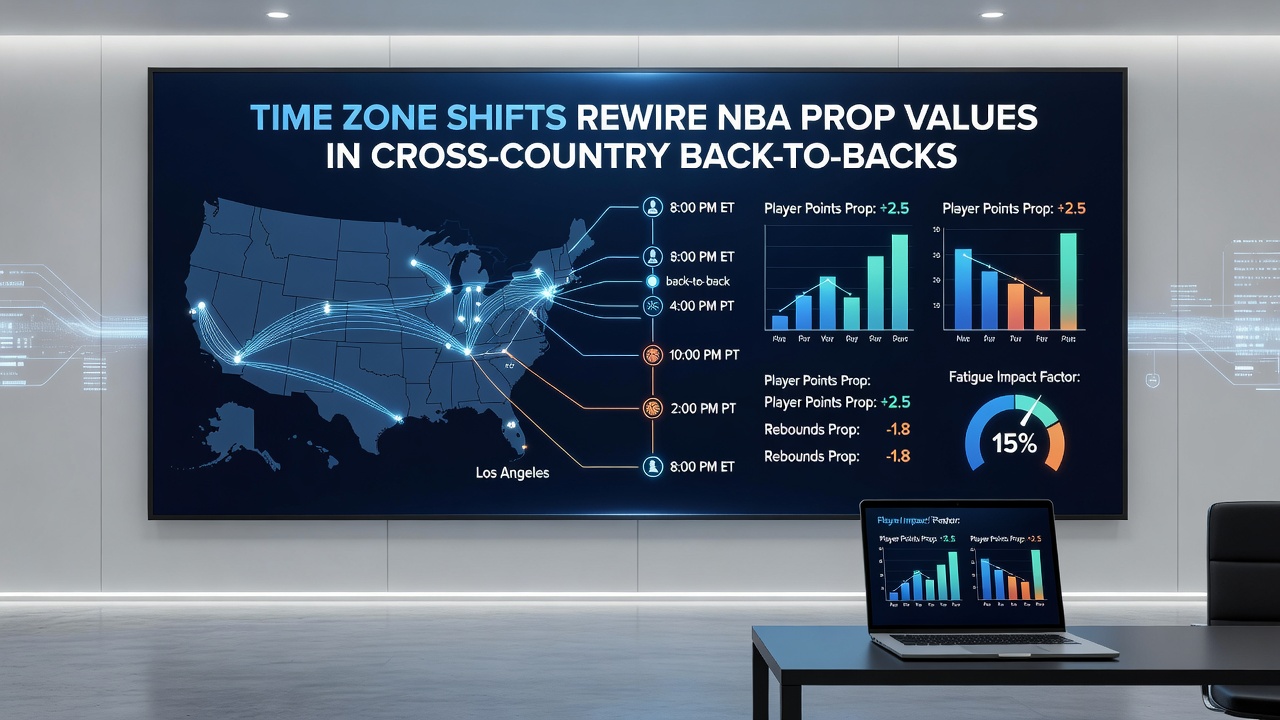
Betting platforms respond to these patterns by shifting prop lines several hours before tip-off and data from multiple sportsbooks indicate that point totals for eastbound teams move downward by an average of 3.5 points while player-specific props follow similar trajectories. Sharp bettors monitor flight manifests and arena start times to identify edges before lines stabilize and historical records demonstrate that lines opened the day before travel often contain larger discrepancies than same-day updates. Industry reports from North American gaming associations highlight that volume on player props rises during national TV doubleheaders because casual participants overlook travel effects while professional bettors target the resulting inefficiencies.
Recovery Protocols and Team Strategies
Franchises deploy sleep specialists and adjust practice schedules to mitigate jet lag yet measurable gaps persist across datasets. Teams arriving early sometimes conduct light shootarounds timed to the destination zone while others rely on melatonin protocols and hydration plans. Research published by Canadian university sports labs shows that consistent application of these methods narrows performance gaps but does not eliminate them entirely especially when games occur on consecutive nights. Prop bettors tracking team medical staff announcements gain additional context because late changes to rotation minutes often follow cross-country trips.
Long-Term Implications for Scheduling
League officials continue evaluating schedule density and August 2026 planning sessions will address whether further reductions in back-to-back frequency can limit time zone strain. Current models project that limiting consecutive games across three time zones would stabilize several key prop categories including points, rebounds, and turnovers. Data sets maintained by academic research groups already compare pre- and post-schedule reform seasons to quantify the effects and early indications suggest modest improvements in shooting efficiency when travel windows extend by at least 48 hours.
Conclusion
Time zone shifts during cross-country back-to-backs produce consistent, trackable alterations in NBA player prop values that appear in aggregated statistics and line movement records. Teams, analysts, and market participants incorporate these patterns into preparation and pricing models because the underlying performance data remains stable across multiple seasons and geographic regions. Continued monitoring of schedule releases and travel data provides ongoing clarity on how circadian factors intersect with game outcomes.