NBA Schedule Congestion and Its Influence on Fourth Quarter Over/Under Markets in Playoff Races
Kai Krause · Jul 30, 2026
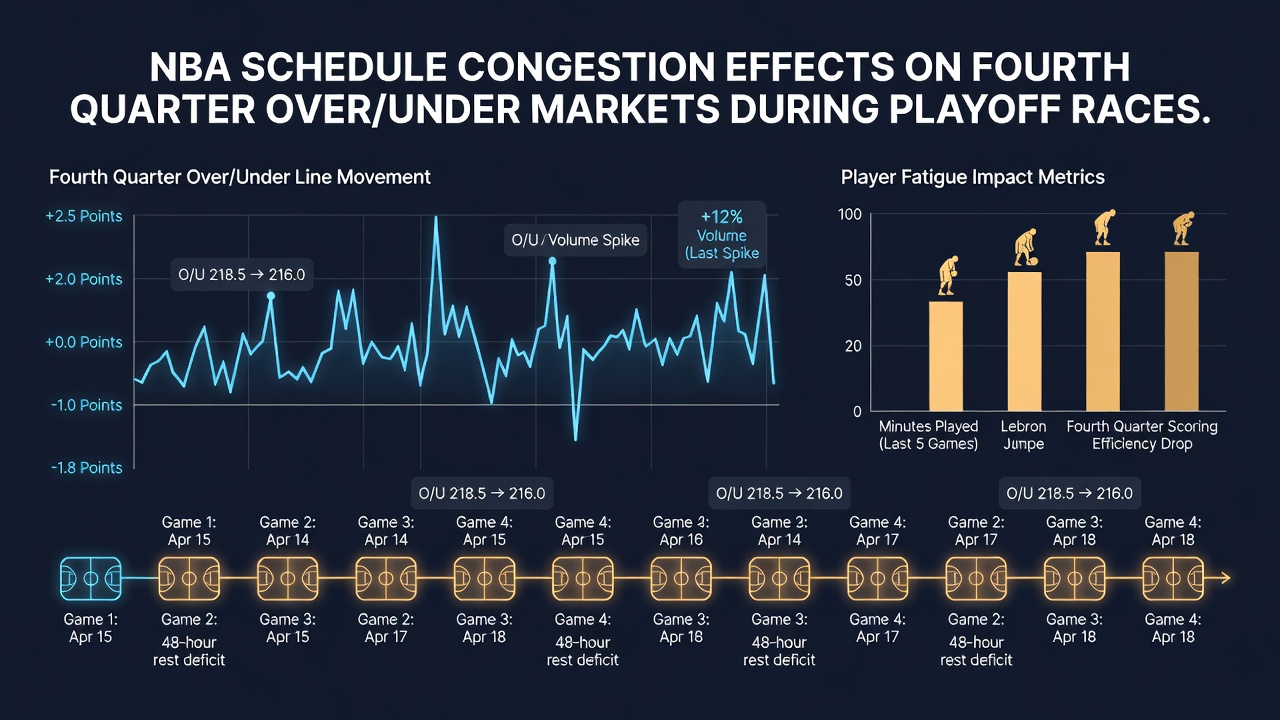
NBA Schedule Congestion and Its Influence on Fourth Quarter Over/Under Markets in Playoff Races
Schedule density in the NBA reaches peak levels during the spring months when teams chase playoff positioning, and data from recent seasons shows measurable effects on fourth quarter scoring totals. Teams often play three games in four nights or five contests within seven days while jockeying for seeds, and researchers tracking box scores find that average points per quarter drop notably in the final frame under such conditions. Over/Under markets for the fourth quarter respond to these patterns because fatigue accumulates across rotations and defensive schemes tighten as players conserve energy for critical possessions.
Schedule Patterns That Define Congestion Periods
League calendars place multiple back-to-backs and travel-heavy stretches precisely when standings tighten between February and April, creating conditions where front offices and coaches must manage minutes carefully. Observers tracking usage rates note that stars log fewer fourth quarter minutes on the second night of back-to-backs compared with well-rested matchups, which directly influences the distribution of scoring opportunities. Data indicates that teams on the second night of a back-to-back allow opponents slightly higher efficiency in transition but struggle to generate their own fast-break points late in games.
Coaches adjust rotations by leaning on bench units earlier, and this shift alters the pace and shot selection that betting markets price into fourth quarter lines. Studies of play-by-play data reveal that fourth quarter possessions slow down when both clubs entered the game after limited rest, leading to more half-court sets and fewer three-point attempts overall.
Performance Metrics in Congested Schedules
Player tracking systems record declines in sprint speed and jump height during the fourth quarter of games following compressed schedules, and these physical changes correlate with lower field goal percentages inside the paint. Analysts examining SportVU data across multiple seasons find that contested shots rise in frequency while open looks decrease, pushing totals toward the under in many instances. Teams that played the previous night convert fewer catch-and-shoot opportunities and commit more turnovers when forced into extended minutes by foul trouble or injuries.
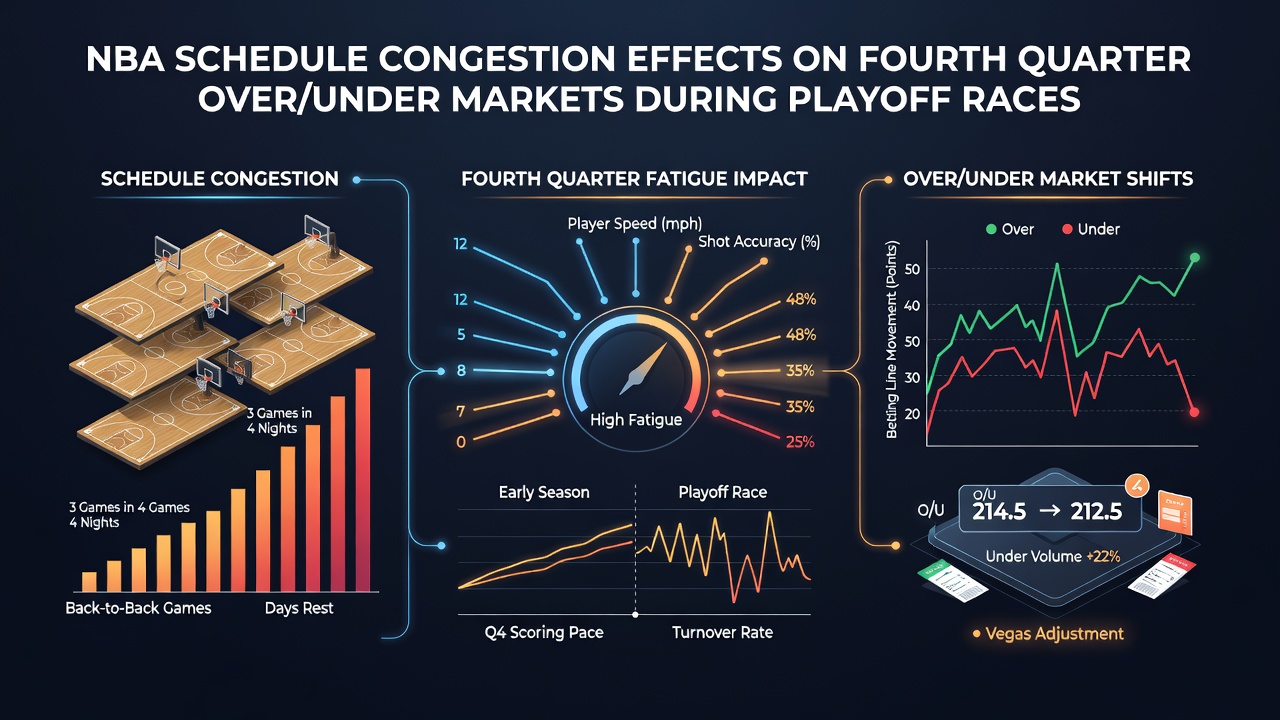
Rest advantages matter most for teams already locked into playoff positions versus those still fighting for home-court seeding, and records show that squads with extra days between games maintain higher fourth quarter output. League-wide averages from the 2024-25 campaign illustrate that fourth quarter team totals fell below season norms by roughly three points when both participants arrived on one day of rest or less. Such figures help explain why oddsmakers shade totals lower once schedule congestion becomes evident in the standings race.
Market Adjustments and Line Movement
Betting markets incorporate rest and travel data into fourth quarter totals before tip-off, yet line movement accelerates once starting lineups and injury reports confirm heavy rotation changes. Sharp bettors monitor usage rate drops for high-minute players and adjust expectations for points scored after the third quarter buzzer. When a team sits its starters for the final minutes of a game already decided, fourth quarter scoring often flattens further and pushes totals under the posted number.
Historical results from the 2023-24 and 2024-25 seasons show that fourth quarter unders hit at a higher clip during March and early April compared with earlier months, coinciding with the most congested portions of the calendar. NBA tracking statistics confirm these trends while also highlighting that certain high-pace teams buck the pattern when facing weaker opponents. Market makers respond by offering adjusted totals that reflect both the schedule context and the specific matchup dynamics.
Regional and Travel Factors
Cross-country trips compound the effects of back-to-backs, and teams returning from the West Coast to Eastern time zones exhibit additional dips in fourth quarter efficiency. Canadian teams face unique scheduling hurdles due to cross-border travel, and records from those clubs demonstrate similar reductions in late-game scoring during playoff pushes. Industry reports from the American Gaming Association note that bettors increasingly factor travel distance and time zone changes into their fourth quarter total decisions as the season reaches its final weeks.
Conclusion
Schedule congestion during NBA playoff races produces measurable shifts in fourth quarter scoring that influence Over/Under markets, and available data continues to support these relationships season after season. Teams navigating compressed calendars show reduced fourth quarter output, prompting oddsmakers to adjust totals accordingly while bettors monitor rest advantages and rotation patterns for edges. As the 2026 offseason gives way to the next campaign, these dynamics remain central to understanding how late-season schedules shape betting outcomes in the final period.