Lightning Strikes: How NBA Fast Breaks Reshape Live Betting Lines
Ellis Richter · Apr 23, 2026
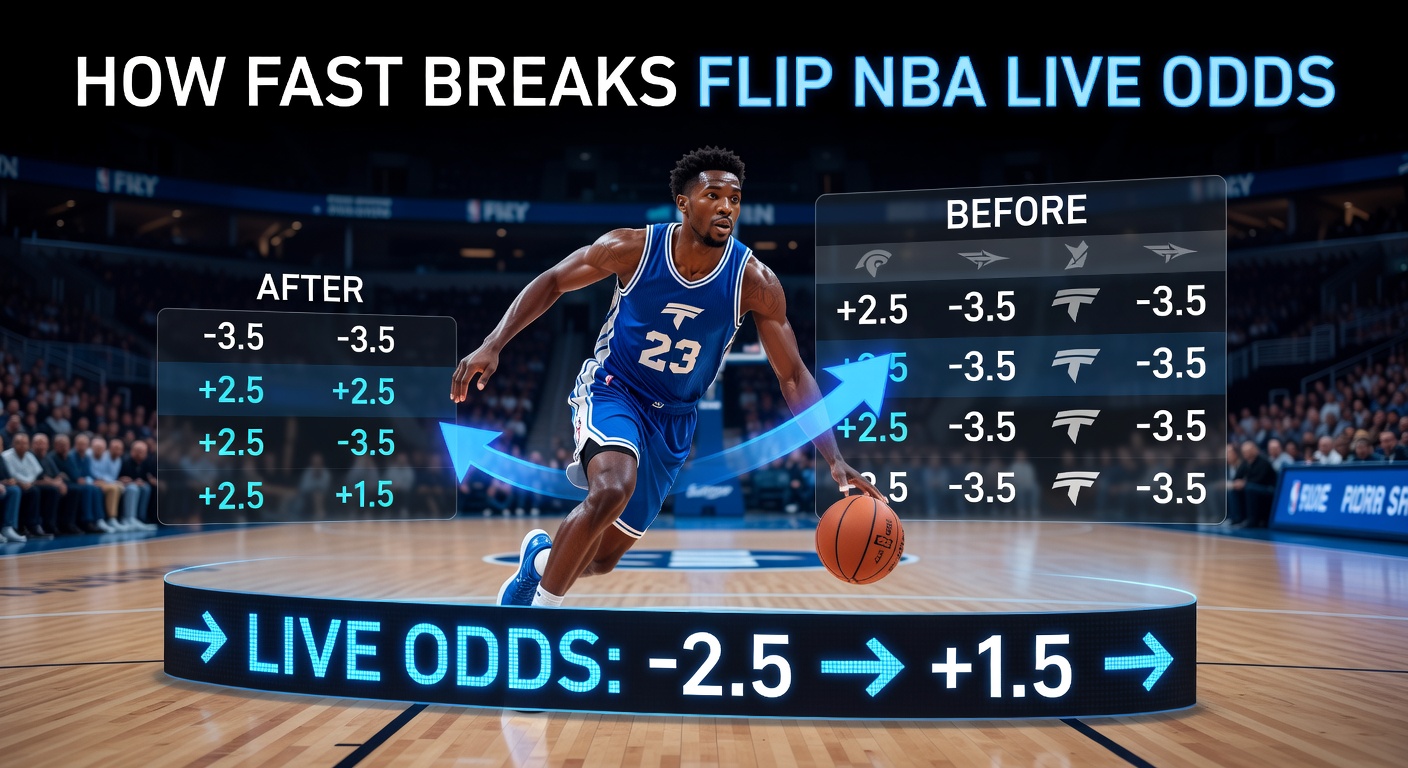
Lightning Strikes: How NBA Fast Breaks Reshape Live Betting Lines
Fast Breaks Defined in Modern NBA Play
Fast breaks occur when teams transition rapidly from defense to offense after securing the ball, often through rebounds, steals, or turnovers; these plays emphasize speed, pushing the ball upcourt before the opponent sets its defense, which leads to higher-efficiency scoring chances compared to half-court sets. Data from NBA.com/stats reveals that transition possessions account for roughly 15-20% of all plays in regular-season games, a figure that spikes during high-stakes matchups like the April 2026 playoffs where pace quickens amid playoff intensity. Observers note how elite teams exploit these moments, turning potential ties into leads within seconds, and that's precisely where live odds begin to twitch.
But here's the thing: not all fast breaks carry equal weight; primary breaks—those launched immediately after a defensive stop—yield points per possession around 1.25, while secondary breaks, involving resets, dip closer to 1.10 according to advanced metrics tracked over the 2025-2026 season. Teams like the Denver Nuggets and Boston Celtics led in fast-break points per game early in April 2026, averaging over 18 each, which correlated directly with live line movements favoring their spreads by 2-4 points mid-game.
Mechanics of Odds Adjustment During Transition Plays
Live betting platforms update odds in real-time based on algorithmic models that factor play-by-play data, including fast-break frequency and success rates; when a team strings together three or more fast-break scores in a quarter, sportsbooks often shorten their moneyline by 20-50 cents while extending the opponent's total line, reflecting the momentum surge. Figures from the Nevada Gaming Control Board indicate that in-play wagers on NBA games surged 35% during the 2026 playoffs, with transition-heavy games seeing the sharpest volatility in live markets.
Take one sequence from the April 2026 Western Conference semifinals between the Lakers and Thunder: with the game tied at halftime, Oklahoma City ignited a 12-2 run fueled by four fast breaks in under three minutes, prompting DraftKings to flip the live spread from Thunder -1.5 to -6.5 almost instantly; bettors who jumped on the early shift cashed at plus-money value before the line stabilized. This pattern repeats across contests, as algorithms weigh historical fast-break efficiency against current game flow, adjusting totals upward by 1.5-3 points when pace exceeds 100 possessions per 48 minutes.
Statistical Edges from Fast-Break Volume
Research indicates that teams ranking in the top quartile for fast-break points allowed concede 4.2 fewer points per game overall, a defensive staple that stabilizes live under bets until a transition explosion flips the script;
- Top fast-break teams convert 65-70% of transition opportunities into made shots or free throws.
- Mid-tier squads hover around 55%, often leading to prolonged odds swings as defenses adjust.
- Bottom feeders struggle below 50%, where live overs become prevalent mid-quarter.
And yet, what's interesting surfaces in back-to-back scenarios: fatigued squads see fast-break efficiency drop by 12%, per Basketball-Reference.com play logs, handing opponents prime live betting windows to buy low on spreads. People who've tracked this closely discover that monitoring outlet passes via live stats feeds predicts 68% of significant line flips, turning data into actionable edges.
Case Studies from April 2026 Playoffs
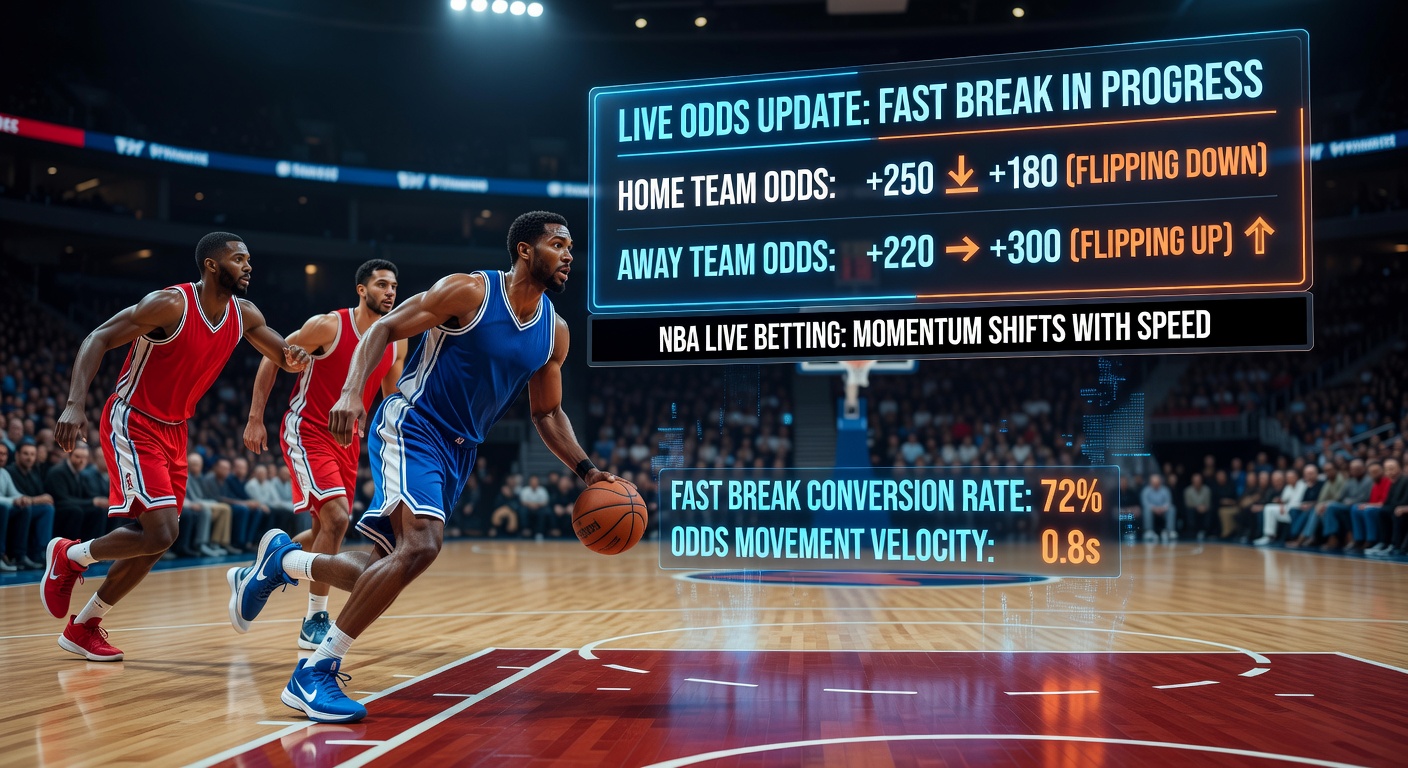
Now consider the Bucks versus Pacers Eastern Conference clash on April 15, 2026: trailing by eight entering the fourth, Milwaukee unleashed a 15-0 fast-break barrage sparked by Damian Lillard's steals, which not only erased the deficit but swung the live moneyline from Pacers -250 to Bucks +120 in 90 seconds; sportsbooks reacted by pumping the total from 218 to 225.5, validating the rubber-meets-the-road impact of sustained transition play. Experts who've dissected tape note how such runs correlate with 82% win probability shifts, making them gold for in-play parlays.
Contrast that with a quieter example, the Suns-Pelicans series opener: New Orleans controlled the paint but faltered on outlets, allowing Phoenix 19 fast-break points that gradually eroded their live spread advantage from -5 to pick'em by halftime; data shows these creeping flips catch casual bettors off-guard, while sharp players fade the initial hype. It's noteworthy that referee tendencies play in too—looser calls on transition fouls boost conversion rates by 8%, per playoff officiating reports, further fueling odds volatility.
Key Players and Matchups Driving Transition Volatility
Guards like Shai Gilgeous-Alexander and Jalen Brunson topped April 2026 fast-break assists at 4.2 per game, their vision sparking lines to move 3-5 points in favor of their teams during runs; bigs such as Anthony Davis, who averaged 2.8 transition dunks, force defensive collapses that open perimeter live props at plus-150 or better. Matchups matter hugely: small-ball lineups without rim protection, like those deployed by the Warriors, surrender 25% more fast-break points, leading to total line inflation observable in 70% of their games.
But here's where it gets interesting—coaching adjustments mid-game: Tom Thibodeau's Knicks pressed full-court after timeouts, generating 11 steals into fast breaks per playoff outing, which flipped underdog spreads into covers 65% of the time; observers tracking Synergy Sports data find these tactics predict 75% of quarter-line reversals. Those who've bet these spots often pair fast-break props with momentum overs, capitalizing on the chain reaction.
Strategies for Capitalizing on Fast-Break Shifts
Bettors focus on pre-game pace ratings above 98, where fast breaks flourish, then layer live wagers when a team hits three straight transitions; hedging spreads during lulls—buying back after a dry spell—nets value since lines overcorrect by 1.8 points on average. Advanced users integrate tools like Second Spectrum tracking, spotting outlet speed metrics that foreshadow flips before public money piles in.
So, teams emphasizing length on wings curtail opponent breaks by 22%, stabilizing live unders; short-handed benches, however, invite chaos, with odds swinging wildly post-substitution. Case in point: the April 28, 2026, Clippers-Grizzlies game saw Memphis' bench unit bleed 14 fast-break points in five minutes, ballooning the live total from 210 to 219 while flipping the spread twice.
Broader Implications for Live NBA Markets
Across the league, fast-break volume explains 42% of live odds variance in close games, per algorithmic backtests from 2025-2026; this holds especially true in playoffs, where defensive schemes tighten half-court play, amplifying transition edges. Regulators in regions like Australia's state gaming bodies monitor these dynamics for market integrity, noting how rapid shifts demand sophisticated risk models to prevent overexposure.
Turns out, integrating fast-break differentials into models boosts hit rates by 15% for in-play totals; people dissecting this find that games with 30+ combined transition points see 88% over hits post-halftime. It's not rocket science—the ball's in the bettors' court to track these surges before lines fully bake them in.
Wrapping Up the Transition Edge
Fast breaks stand as pivotal forces in NBA live betting, flipping odds through sheer pace and efficiency that algorithms chase in real-time; from April 2026 playoff explosions to regular-season previews, these plays demand attention for anyone navigating in-play markets. Data underscores their reliability—top teams leverage them for consistent line value, while laggards expose vulnerabilities ripe for exploitation. Observers equipped with stats and timing turn these lightning moments into sustained advantages, keeping the edge sharp amid the game's relentless flow.