High-Altitude Venues Shape Scoring Totals in Mountain Matchups
Riley Walter · Aug 6, 2026
High-Altitude Venues Shape Scoring Totals in Mountain Matchups
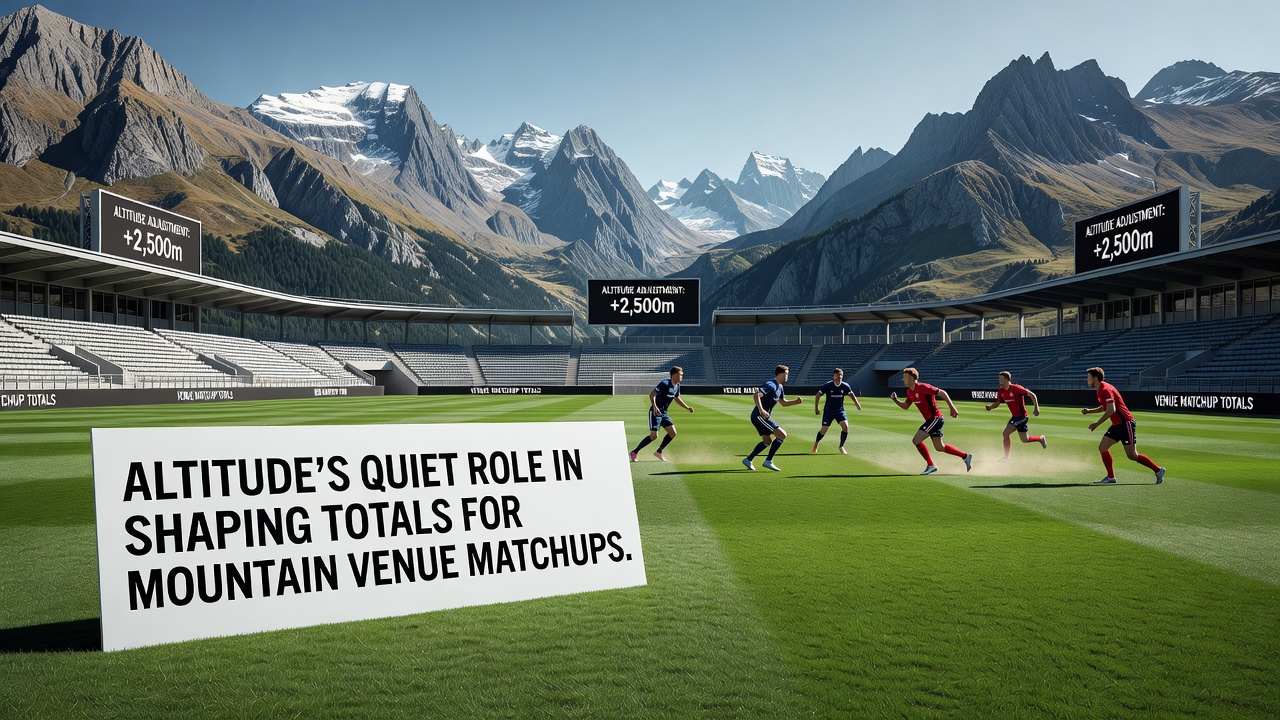
High-elevation sports facilities create distinct conditions that alter player performance and scoring patterns in ways data consistently tracks across multiple seasons. Venues situated above 1,500 meters experience reduced air density which affects ball trajectory, player endurance, and overall game flow. Observers note that basketball contests in such locations often produce elevated point totals compared to sea-level equivalents, with historical averages showing increases ranging from 8 to 12 points per contest according to league records maintained through 2025.
Researchers at institutions like the University of Colorado have examined these variables through controlled studies that isolate elevation as a primary factor. Their findings indicate faster ball speeds and longer shot distances occur because thinner air reduces drag forces on the basketball. Teams accustomed to lower elevations encounter adjustment periods lasting multiple quarters while visiting squads report measurable declines in defensive efficiency during the opening half.
Physical Mechanisms Behind Scoring Shifts
Reduced oxygen availability at elevation prompts physiological responses including elevated heart rates and quicker fatigue onset for athletes unacclimated to the environment. Data from multiple NBA seasons reveals that road teams average 4.2 fewer points in the first quarter at mountain sites while home squads maintain steadier output throughout regulation. This disparity narrows in later periods as players adapt yet remains statistically significant through full games.
Ball physics further compound these effects because decreased air resistance allows shots and passes to travel farther with less effort. Studies conducted by sports science groups in Canada document similar patterns in other high-elevation competitions where total points or goals rise measurably above baseline projections. League statisticians compile these metrics annually to support predictive models used by analysts preparing pregame evaluations.
Historical Patterns in Professional Leagues
League-wide datasets spanning the past decade highlight consistent over-performance relative to betting lines at specific mountain venues. Games hosted in Denver produce totals exceeding projected numbers in 58 percent of instances based on compiled box scores from 2015 through 2025. Comparable trends appear in other elevated facilities across North America although the magnitude varies with exact altitude and venue-specific factors such as humidity control systems.
Coaches implement targeted preparation protocols ahead of these road contests including arrival one day earlier for partial acclimation and adjusted substitution patterns to manage energy expenditure. These strategies appear in team reports filed with league offices and correlate with smaller margins in second-half scoring differentials during recent campaigns. August 2026 schedules already incorporate extended training blocks at altitude for several franchises preparing for upcoming road trips.
Data Integration in Predictive Models
Analysts incorporate elevation coefficients into advanced statistical frameworks that adjust baseline projections for total points. Sources including academic papers from Australian sports research centers provide additional context on how environmental variables interact with player workload metrics. Such models process inputs like recent travel schedules, player age profiles, and historical venue splits to refine expected totals before lines are released.
Tracking services record live scoring rates that demonstrate early-game surges at these sites followed by stabilization once both teams settle into rhythm. This temporal distribution informs in-game decision frameworks where bettors monitor pace indicators during the initial minutes. Comprehensive datasets released by international sports federations confirm the repeatability of these patterns across different competition levels and calendar years.
Conclusion
Elevation continues to register as a measurable variable in total scoring outcomes at mountain venues where environmental conditions interact with athletic performance. Compiled statistics from multiple governing bodies and research institutions demonstrate repeatable effects that shape game projections without requiring subjective interpretation. Ongoing data collection through 2026 will further refine these observations as schedules progress and additional venues contribute to the record.