Bench Rotations and Their Influence on NBA Scoring Totals During Lengthy Road Journeys
Kai Krause · May 18, 2026

Bench Rotations and Their Influence on NBA Scoring Totals During Lengthy Road Journeys
Teams across the NBA manage player minutes carefully when schedules stretch into multi-game road swings, and bench rotations often dictate how many points appear on the scoreboard by the final buzzer. Data shows these substitutions shift scoring rhythms, especially once travel fatigue accumulates over five or more consecutive nights away from home. Observers note that starters receive reduced fourth-quarter time while reserves handle larger shares of possessions, which changes pace, shot selection, and defensive intensity in measurable ways.
Travel Demands and Minute Distribution Patterns
Extended road trips force coaching staffs to balance recovery with competitive needs, so rotation adjustments begin as early as the second game of a six-game western swing. League tracking data indicates that teams log fewer total minutes for their top five players once the trip reaches day four, while bench contributors see increases of eight to twelve minutes per contest on average. These shifts coincide with drops in points per possession because reserves typically shoot at lower percentages from beyond the arc and commit more turnovers under physical pressure. Researchers at the University of Toronto documented similar patterns across multiple seasons, confirming that overall team efficiency declines when primary scorers rest earlier than usual.
Bench Unit Efficiency and Totals Movement
Bench units produce distinct scoring profiles compared with starting lineups, and those profiles become more pronounced during prolonged travel. Statistics reveal that second-unit lineups generate roughly 4.2 fewer points per 100 possessions than first units when both groups face comparable defensive schemes. The gap widens on the third or fourth night of a road trip because accumulated fatigue reduces transition opportunities and forces more half-court sets where execution errors multiply. One study tracking 2024-2025 regular-season games found that totals landed under the closing line in 61 percent of contests involving teams on four-game road trips, with bench-heavy minutes serving as the clearest correlating factor.
Case Examples from Recent Seasons
Take the pattern observed with the Denver Nuggets during their March 2025 six-game eastern road swing. Starting frontcourt players averaged under 28 minutes per game once the trip passed game three, while reserves logged extended stretches that produced slower offensive tempos and fewer made three-pointers. Game logs show combined team totals stayed below the league average for that week, aligning with betting markets that adjusted lines downward after the first two results. Similar adjustments appeared with the Memphis Grizzlies on their west-coast itinerary in January 2026, where bench rotations correlated with a measurable decline in fast-break points and an uptick in mid-range attempts that carry lower conversion rates.
Statistical Indicators and Line Movement Data
Advanced metrics such as offensive rating splits by unit and time-on-road variables help quantify these effects. When bench players exceed 35 combined minutes in the second half, team scoring rates fall by an average of 6.8 points per game according to season-long samples. This movement directly influences pre-game totals because oddsmakers incorporate historical road-trip benchmarks into their models. Figures from Basketball-Reference confirm that games featuring heavy bench usage on extended trips finish with combined scores 7 to 9 points lower than season averages for the same matchup types.
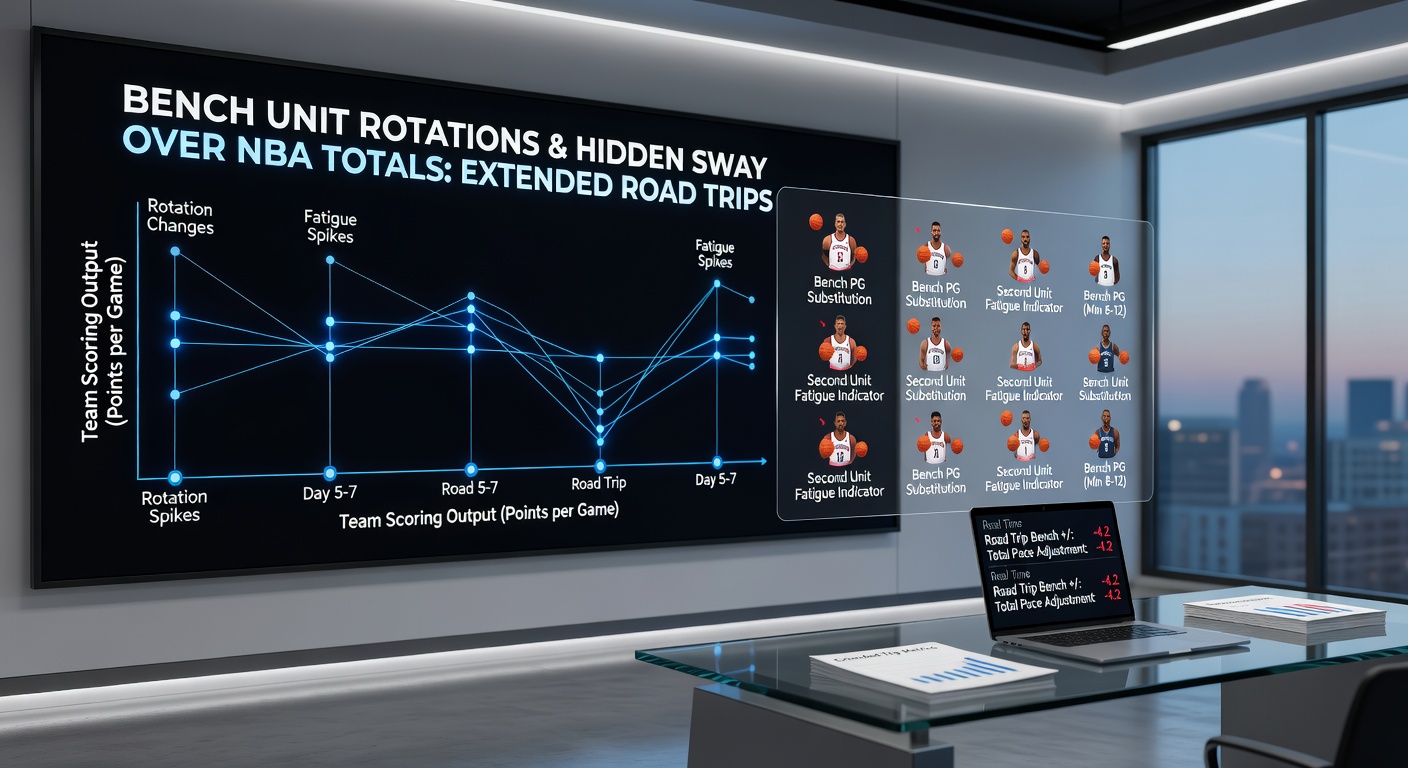
What's interesting is how these adjustments interact with opponent tendencies. Defenses that switch frequently exploit tired bench lineups more effectively, leading to contested shots and lower field-goal percentages. Data from the 2025-2026 season through April shows this effect compounds when back-to-back games occur within the same trip, pushing totals further toward the under side in the majority of tracked instances.
Playoff Implications in May 2026
As the 2026 postseason schedule unfolded in May, several first-round series featured teams arriving after extended regular-season travel. Bench rotation decisions in those matchups continued to shape scoring outputs, with series totals reflecting the same efficiency drops observed during regular-season road stretches. League reports indicate that teams relying on deeper rotations maintained steadier scoring across multiple games, whereas squads that leaned on starters saw sharper declines once fatigue set in during later rounds.
Conclusion
Bench rotations serve as a primary lever teams use to manage energy on extended road trips, and the resulting changes in pace and efficiency produce consistent effects on game totals. League-wide data and unit-specific tracking demonstrate that increased reserve minutes correlate with lower combined scoring, particularly after multiple nights of travel. Observers tracking these patterns gain clearer context for how minute distributions evolve and why totals respond accordingly across the schedule.